Welcome, Perry!
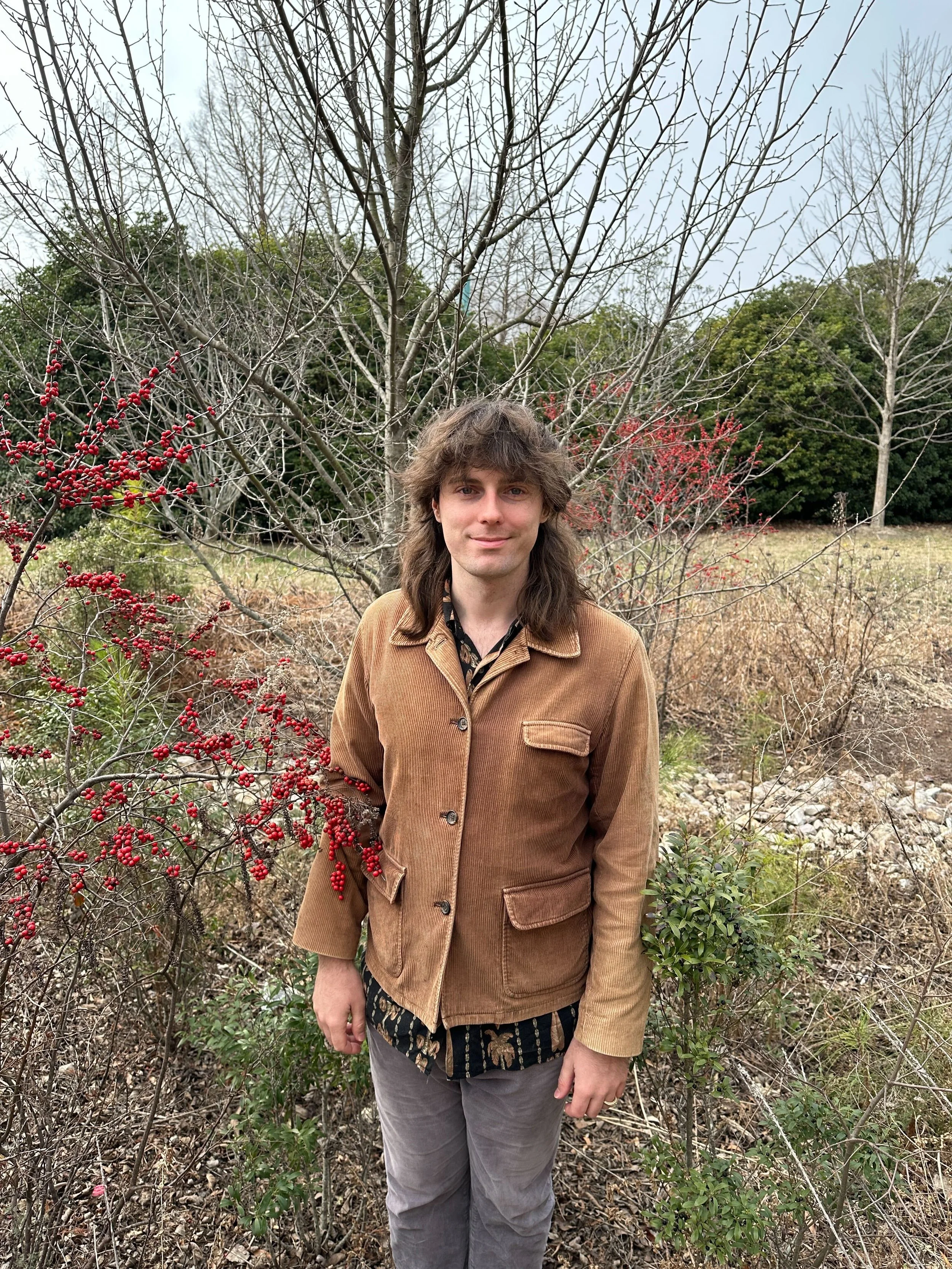
Perry Verge (2026)
We’re excited to welcome Perry Verge to Wetlands Watch as our new Chesapeake Bay Landscape Professional (CBLP) Virginia Coordinator. The CBLP program is a practitioner training and certification program focused on sustainable, conservation landscaping practices that improve water quality and community resilience. Perry brings a variety of strengths that align closely with the role, including careful attention to the practical details that make trainings run well; the ability to translate complex project information into tools practitioners can use; and a genuinely engaged way of working with partners that builds trust over time. As we grow CBLP’s trainings and certification network across the Commonwealth, these capacities will directly support the practitioners and communities the program is designed to serve.
A consistent thread in Perry’s background is a proclivity for systems thinking, an approach developed in the sciences and then refined through operational work. Perry holds a B.A. in Chemistry and a minor in Environmental Studies from St. Mary’s College of Maryland. Early in his career, he applied this training in a production environment where precision and documentation are operational requirements: the wine industry. At Martinelli Winery in Windsor, California, Perry worked in fermentation and laboratory roles that involved collecting field samples, managing fermentation data, and performing wet-chemistry analyses. This experience carries directly into living infrastructure work where technical standards and field realities must stay aligned. As we expand CBLP across Virginia, Perry will naturally strengthen both sides of the program’s promise: rigorous technical content, and the thoughtful practitioner relationships that sustain the program year after year.
Over time, Perry’s perspective widened beyond production and lab work into the larger question of how culture, geography, and land use shape the way a community functions. This shift drew him toward urban planning and green infrastructure as applied problem-solving at the scale where people actually live, work, and move through a city. Perry is especially attentive to the interface between stormwater and transportation systems, and to the ways living infrastructure can reduce flood risk while making streets and neighborhoods safer, greener, and more navigable. He is also interested in the implementation side of this work: how governments, organizations, and community members coordinate to make sure the projects communities need can actually be built.
Perry recently completed a Tidewater Community College (TCC) certificate program in Geographic Information Systems (GIS), building strong GIS fluency. He has also completed ESRI training in cartography and imagery, and is pursuing a Sustainable Cities specialization. He can take project inputs such as spreadsheets, site plans, and engineering drawings and translate them into clear maps and GIS layers that partners can use to orient quickly and make aligned decisions. He has applied this skill as a volunteer with the Elizabeth River Project, translating living shoreline plans into GIS so project details are easier to share, review, and coordinate across stakeholders.
This technical toolkit is paired with an everyday, street-level way of reading the built environment. A large part of Perry’s planning perspective is personal and practical: he moves through the world by bike. This daily experience makes shared community infrastructure visible at the scale of daily life, and keeps in view the difference between a place that functions on paper and a place that works in the lived experience of the community.
With this grounded perspective in mind, Perry will serve as CBLP’s Virginia Coordinator, planning trainings that are relevant across the public, private, and nonprofit sectors of living infrastructure, and strengthening the practitioner relationships that keep standards consistent across projects and regions. Perry has said he is especially excited to expand his expertise beyond viticulture into the broader ecological vocabulary of native Virginia landscapes. We’re grateful to have found a Virginia lead who combines technical rigor with an instinct for making people feel welcome, someone who will deliver trainings that are both useful and enjoyable to complete, and who cares as much about how a place works as how it feels to live in it.
Welcome to Wetlands Watch, Perry!